Don’t get caught up in the terminology and technicalities.
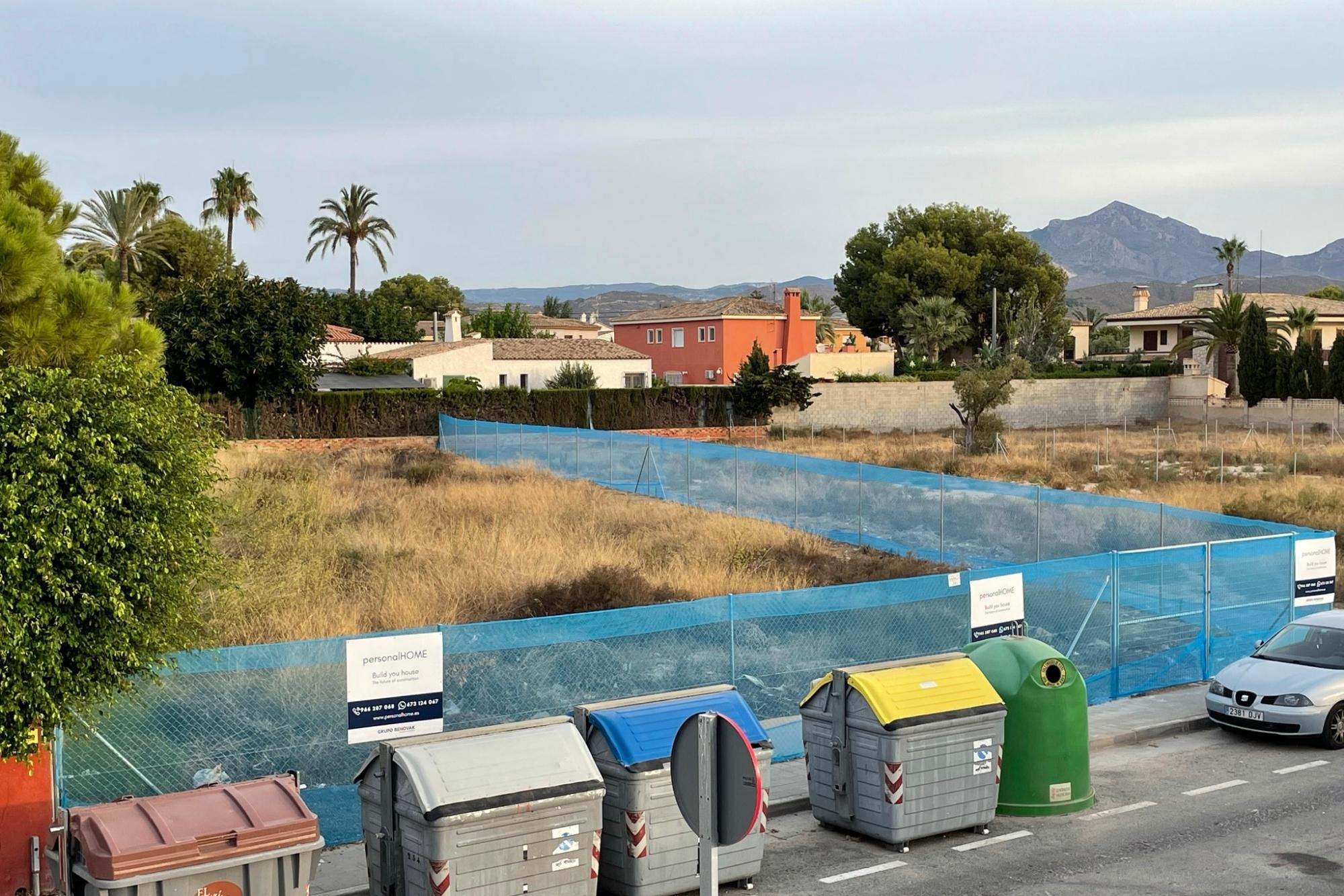
If you want to live in a single-family home built by yourself, as a private developer, and you do not have land, you should look for a plot of land with the status of building plot for the construction of a single-family home.
This way you would be 100% sure of what you could build.
Surely, you have started to look for land and the most repeated word is urban, followed by rustic, urbanisable, rural, and so on.
In Spain, traditionally there always have been three types of land, such as “urbano”, “urbanizable”, and “rústico”. Building land or “suelo urbano” is land on which construction can take place. Thus, the term “suelo urbanizable” refers to the land in the process of being rezoned to building land and requires a series of political intentions (and are therefore problematic). Finally, “suelo rustico” which has a well-known barrier of at least 10,000 square metres plot size, and usually a 2% buildable area.
If you are actively looking for land in Spain or on the Costa Blanca in particular, it is important that you familiarise yourself with these concepts as they will be of great help in preventing you from acquiring a plot of land that does not meet the necessary requirements to build there and your future expectations are bound to fail.
Before proceeding with the purchase, or even giving a deposit, you must make sure that you can build there. In other words, either there is no legal or administrative obstacle that prevents you from locating a house there, or because it does not meet a condition of a plot destined for residential building. This may happen as it may be used as an endowment or maintains some type of special legal protection.
This information appears in the technical and urban planning documentation of the town councils, given that it is the town hall (along with the approval of the regional authorities) that decide and determine the urban development of a town or city.
Nowadays, this information is freely available and can be found on the Internet, on the websites of the local town departments of each municipality. Although the degree of online presence depends on each town hall and the age of its local plan (“Plan General de Ordenación Urbana” or PGOU).
Although there can be as many ways of showing a PGOU as there are cities, it is common to encounter the locality in its full extension, beyond the city centre, divided by quadrants. Therefore, in each quadrant a series of acronyms that respond to the building typology that the area permits.
Acronyms such as VUA (“Vivienda Unifamiliar Aislada” or detached house/ Villa), RU1 (“Residencial Unifamiliar grado 1” or Residential Single Family grade 1), ADO (“Adosado” or semi-detached house), RA1 (“Residencial Abierta grado 1” or Residential Open grade 1) and so on.
There are endless number of concepts that must be checked against the descriptive report or town planning regulations that indicate what your house can be like: what is the minimum plot, the square metres of buildability (buildability coefficient, ceiling), maximum occupation of the plot, façade width, setbacks, floors, maximum height, auxiliary constructions and so on. With all this information you can now know, not only if you can build on that plot, but also the characteristics of your future home.
PGOUs can be quite old and, on many occasions, over the years, modifications are approved that adapt the plan to the urban and social reality of the cities. It is therefore essential that when you consult the PGOU you make sure that it is the latest modification of the PGOU. To give an example, in the specific case of the city of Alicante, the definitive approval of the current PGOU dates back to 1987, and in these 35 years, it has been modified 31 times.
To conclude, it is very likely that the first time you try to find out if a plot of land is suitable for building, you will be disappointed. You can always request a prepaid town planning report from the technical services of the town hall where the land is located or seek advice from companies specialising in the management and construction of single-family homes. Such as personalHOME, who will accompany you throughout the process offering you a turnkey service at a fixed price.